Showing posts with label Tips Trading. Show all posts

Sunday, January 15, 2012

Super Charging Affirmations

Affirmations are one way to install an empowering belief and to weaken (or eliminate) a limiting belief. An affirmation is best stated when it's simple, brief, positive, and in the present tense.

  • I am a disciplined trader.
  • The market provides me with an abundance of opportunity.
  • The market is my partner in success.
  • I consistently follow my trading guidelines.
  • I am a winner. I think like a winner. I do the things that winners do.
If the affirmation is patently not true for you at the present time, you can make it believable by turning it into a process of becoming. I am becoming a disciplined trader.
Another way to make it more credible is by turning it into a question. Our minds assume the truth of the question and go on a search for the answers. In what ways does the market provide me with abundant opportunity? By turning the affirmation into a question, you avoid the oh yeah? response.
Once you have your affirmation worded effectively, you can super charge it by making a mental image of the affirmation fulfilled. You can construct a still picture or create a mental movie, a vivid daydream of the affirmation happening. Either way, take time to make the picture clear, vivid, focused, up front and near enough to feel present. Once you have the picture step out of the picture so you see yourself in the picture.
A picture, it has been said, is worth a thousand words. When you say your affirmation in the future, that picture will flash into your mind. For example, when you say, The market is my partner in success, a picture of yourself trading profitable in synch with the market will reinforce the affirmation.
Once you have the affirmation and the image, you want to super charge it with feelings. Thought mixed with feeling acts like a magnet to bring that thought into reality.
For example, when you say, I consistently follow my trading guidelines, and in the back of your mind you see a picture of yourself doing that, you allow yourself to feel the confidence and trust in your methods and the probabilities that enable you to be consistent with your rules and strategies.
Now you have an affirmation that is so powerful, it will manifest itself in your trading. You have combined your desire with your imagination. Your will power is now supported by your imagination. You affirm yourself to trading success.
Of course, you still have to find out what works, verify that it works, and apply it to your trading. Simple wishing is not enough to win.

Wednesday, January 11, 2012

Trading Psychology: Three Losses in a Row

3 losses in a row are tough. That’s about the most consecutive losses that novice traders are psychologically prepared to accept before they feel compelled to take action and ‘correct’ the situation.
If you’re anything but a total newbie, I’m sure you’ll recognize the symptoms:
Frustration – Why me? I’ve worked so hard. Everyone else in the forum appears to be getting good results with this strategy? Nothing ever works out for me.
Anger - That strategy developer is a liar and a crook. My broker is running my stops. Someone should be held accountable for this.
Doubt – What if the strategy doesn’t work? What if I can’t trade? How am I going to support my family?
Fear– I can’t lose more money, what will everyone say about me when they know I’m a loser? How can I tell my wife/husband that I’ve lost again?
And if that’s not enough, the novice trader will likely be afflicted with the crippling inability to pull the trigger on the next trade, in fear of hitting a fourth loss in a row.
Usually, there is one of two responses:
1) The strategy is tweaked to ensure that the modified version would not have triggered these losing trades, through:
a) Swapping one indicator for another,
b) Optimising indicator parameters, or
c) Adding an additional filter.
2) Totally abandoning the strategy, usually followed by returning to their favourite forum to find the next Holy Grail strategy that is designed to make their dreams come true.
Is this the right response though?
Typically, trading decisions which are influenced by emotions rarely result in the right action.
So, what should be done?
First, before we continue, you need to confirm that you do have a valid, proven trading strategy. Have you conducted appropriate testing to satisfy yourself that it provides a positive expectancy? If not, stop trading it right now and return to testing. I don’t care what reason you had for jumping straight into a live trading environment, but the fact is that it’s difficult to psychologically trade a strategy in a consistent and disciplined manner when you don’t have complete confidence in its rules. You need to conduct thorough testing.
But assuming you have a strategy that has proven itself through positive results either in a testing or live tradingenvironment, simply refer to your testing results or pasttrading history, and you’ll confirm that three losses in a row is a quite normal occurrence. In fact, it’s quite normal to have a lot more than three in a row. And it does not mean that your strategy is flawed.
Let’s look at this from a purely statistical perspective.
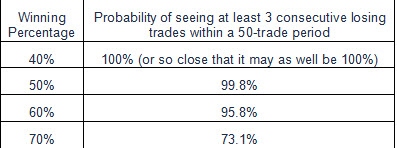
Image 1 Trading Psychology: Three Losses in a Row
The table above shows that given a trading strategy with a 50% win/loss ratio, the probability that you’ll get a string of three losses in a row somewhere within your next 50 trades is 99.8%.
Even if you’re achieving a win/loss ratio of 70%, you’ve still got a 73.1% chance of having a string of three losses somewhere within your next 50 trades.
It’s going to happen. It’s a normal occurrence. Accept it.
So, based on this, what’s a reasonable response from a trader following three losses in a row?
The first thing is to confirm all three trades were entered and managed in accordance with your plan. You should be doing this for every trade anyway, but if you’re a very short term trader then perhaps you don’t get an opportunity till after the session is over. If that’s the case, and you’ve get three consecutive losses which appear to be worrying you, pause to review them now. If they’re not valid trades, find out why you entered them, refocus on your plan and your goals and then continue trading. However, if they’re valid trades, you might want to consider the following action:
1) If you’re a mechanical trader, keep trading.
2) If you’re a discretionary trader, check to see if each entry is actually at the same setup area. If so, you’re possibly just not reading the market right at the moment. Consider halting your trading until the market action has changed and a new setup has developed.
3) If you still find yourself experiencing difficulty in pulling the trigger, get away from the markets for a while.
a) It’s time to take a break – relax, refresh and recharge yourself.
b) Review your trading plan and your historical results (either live or testing).
c) Carry out some visualisation and affirmation sessions, to prepare yourself for pulling that trigger once your break is over.
d) Return to the markets with the goal of correct application of your plan – don’t focus on the dollars won or lost, instead focus on the process of trading.
4) And if on returning you still find problems, well you’ve got some more serious issues that need to be worked through. I don’t mean that in a bad way, but you need to take a longer break to seriously review both your trading plan and yourself:
a) Are you taking too much risk per position? Reducing your position size can often make an incredible difference in your ability to trade in a relaxed and confident manner.
b) Do you really understand and accept the probabilistic nature of the markets? I’d suspect not. Read “Trading in the Zone” by Mark Douglas for a brilliant insight into these issues.
c) Are you consumed by fear of loss whenever it comes time to enter a trade? What is it you fear exactly? Maybe it’s time to delve into the world of trading psychology. “The Psychology of Trading” and “Enhancing Trader Performance” by Dr Brett Steenbarger would be my recommended starting point.
One final thing! If three losses in a row does not necessarily equate to a flawed strategy, then at what point should you stop trading and review your plan? Well, I don’t base this on a particular number of losses in a row, but rather on a level of drawdown. Only you can determine what should be considered a normal level of drawdown, based on your historical performance. But certainly, if you equal the historical maximum drawdown for your strategy (if not sooner) then you should be reviewing your strategy to confirm it’s based on sound fundamental principles that still apply to the current market environment. And at some stage of drawdown beyond this point, you need to have clearly defined STOP criteria. Don’t bleed your account to death. Stop, take a break if necessary, reassess the situation, conduct further testing and return stronger than ever before.

Steps to Controlling Emotions and Gaining Trading Discipline

1. Know what you are going to do before you do it.
A Master Chess Player is at least 6 moves ahead of his opponent at every step in the game of Chess. A Master Trader identifies themarket participants in that stock at that moment, determines when the next level of market participants will buy, decides a specific price for entry, and has one or more exit strategies planned for that stock trade before he ever places an order. In other words: he knows what he is going to do before he initiates the trade and has all of his various strategies worked out for all the different scenarios that can happen to that trade. He is prepared for all situations and ready to trade.
2. Develop your own unique Trading Style.
Too often traders simply follow the crowd. Instead you should develop your own unique trading style. A trading style is not a strategy. It is a set of parameters or rules that you adhere to strictly, ignoring rare anomalies that occur in your trading from time to time that go against your rules. Your trading style should also ignore gimmicks, fads, and ‘hot new strategies’ that are constantly being promoted to crowd traders. If you establish a set of parameters for your trading, write those rules down, and follow them while ignoring the crowd mentality of most small retail traders, you will begin to establish strong emotional control in your trading decisions. The trick is writing the parameters down and then sticking to those rules. Emotions want traders to ignore rules.
3. Ignore the Money.
Don’t trade for the money. Trade because you can’t imagine doing anything else. Trade because it is the most enjoyable and rewarding profession you can do. You can have a passion for studying charts without letting passion rule your decisions. Highly successful people, in any career, do not do their job because of the money, they do it because they love what they are doing and can’t imagine doing anything else. The money is secondary to doing the job that gives them purpose and self-esteem. Money is not the ultimate motivator, purpose and self-esteem are.
4. Don’t count your profits before the trade is completed.
Most traders worry about their profits and check them every day. They get elated when a stock they are holding moves up a few points and get frantic when a stock they are in moves down. They constantly check their held positions and calculate their gains or losses during the trading day. This is one of the biggest mistakes traders make and it creates an emotional state of mind that lacks control. Checking your profits or losses constantly is obsessive, gambling mode trading. And it is not based on facts.
Most traders assume that if they are in profit in a held stock they have made that money. Conversely, if they are losing money, then they take the stance that this is just a momentary loss and not a real loss. This is how most traders think, but it is the opposite of what they should be thinking.
To gain control over emotions and to gain discipline in your trading you must view your stocks this way: When a stock moves against you, you immediately have a loss, even before you are taken out of that stock. If the stock moves a few points in your favor then you have the potential for profits. But until you exit that stock you do not haveprofits. Only when you sell that stock do you actually have profits. A loss is immediate, even before you sell. Approaching your held stocks in this manner is critical to maintaining the proper viewpoint when holding stocks.
If you view every stock this way, your emotional control is geared for correct responses and decisions for the condition of your trade. If you say to yourself that a losing trade is going to turn around, you immediately increase your emotional level so that instead of thinking logically, you are hoping and praying for a miracle that the stock will turn around. This will cause you to miss subtle chart patterns that are telling you to dump the stock and move on.
If you are in a profitable trade and you say to yourself “look at all the money I’ve made!” you are in an emotional euphoric state of mind. Euphoria makes traders feel invincible, and you will ignore weakening patterns. The result of this euphoric state of mind is that you will either hold a stock too long, or you will take greater risks in your next few trades that will result in losses due to poor analysis dominated by emotions and a false sense of invincibility.
Solution to euphoria: First recognize it. Traders are never brilliant. It is only an ideal trade during great market conditions for that trade. To quell the euphoria, do not trade after you have made a huge profit. Take a few days to settle down. This is not gambling where you can say to yourself “I’m on a roll!” You are most definitely NOT on a roll. Trading takes logical analysis, not super-heated emotions of feeling brilliant. If you stop trading and let your emotions calm down, you will see huge improvements in your consistency of profitability. This is the reality of trading the stock market.
5. Know your risk tolerance.
Two chronic complaints from traders is that Market Makers are ‘out to get them’ and that stop losses don’t work. Both are fallacies steeped in conditions that create deep emotional trading patterns. First let’s get rid of ‘The Market Makers are out to get the little guys Syndrome’. The truth is the Market Makers primary role is to keep the markets orderly by buying or selling their own inventory of stock IF there are no buyers or sellers for an order. That is something that occurs only in large lot activity or illiquid stocks.
If you are trading under 5000 (five thousand) share lots, then you are trading what is considered a small lot in today’s market where billions of shares trade hands each day. The reality is that small orders under 10,000 share lots are routed to computer processing systems. These computer programs fill small lot orders automatically when received from the brokerage houses. Market Makers never see these small orders.NASDAQ has its SuperMontage automated order processing system andNYSE has Archipelago. The Market Makers don’t even know you exist. If your stop loss gets taken out and then the stock moves up (or down) this is not because a Market Maker saw your stop loss and decided to take you out of your tiny share lot trade, it occurred because too many small traders all used the same percentage stop loss and thereby accidentally created an imbalance of order flow that triggered a series of automatic selling that caused you to be taken out.
The second myth: Stop losses don’t work.
The problem is that you are trading way beyond your risk tolerance. Risk tolerance is different for each trader. Most traders don’t even know what their risk tolerance is nor do they consider this when entering a trade.
The common scenario:
A trader places a stop loss that is obviously too tight for the stock’s normal price action patterns because he is afraid to lose money. He thinks that if he keeps a very tight stop, then he is only risking a small amount of money. Often these stop losses are based on a specificdollar amount that has nothing to do the with the chart price action.
The trade is too high risk for his risk tolerance but instead of discarding the trade in search of a trade within his risk tolerance, he trades emotionally by convincing himself the trade will make him a lot of money and that if he just keeps a tighter stop then it is okay. The reality is that by keeping a tighter stop than the stock price action patternindicates is correct, he is actually increasing his risk for that trade as the normal price action will wipe out that stop loss quickly. And that trader’s normal emotional response is that stop losses don’t work.
Rule for stop losses: Do not use common and popular percentage stop losses. Use proper stop losses based on solid support levels for that stock.
Properly placed stop losses do work. They protect you from the occasional trade that goes against you. And they tell you if the risk of the trade is too high–a common condition of an overextended stockripe for profit taking by large lot traders. Improperly placed stop losses increase your risk and are an indication that you are trading outside of your risk tolerance. You are therefore trading emotionally.
How to control emotions:
Determine your risk tolerance and only trade stocks that are within that range. Usually the lower your capital base the lower your risk tolerance will be. As your capital increases, your risk tolerance should also increase as well. Never trade beyond your risk tolerance because you will trade with a heightened state of emotion and your decisions will be based upon greed or fear rather than logic.
6. Know your Financial Self-Worth.
Financial Self-Worth is probably the least known and least understood aspect of trading emotionally. Most traders don’t even realize or accept how much it impacts their trading. The most common symptom of this problem is the trader who suddenly makes some good trades and profits and is feeling great about his trading but the next few trades are disasters that leave him feeling bewildered and frustrated. If this has happened to you on more than one occasion, one of the reasons may be due to the influence of your financial self-worth.
Your financial self-worth is a culmination of many years of your professional adult work experience, your childhood experiences, your general feelings about money, and your educational experiences which create your perception of your worth to the society you live in.
These perceptions are a major emotional constraint in your trading. It is not created by your trading, but has been with you for many years prior to even thinking about becoming a trader. It influences your life far more than you probably realize. It can keep you from earning more money. And it can thwart and hinder your trading profitability. It keeps you from making a higher income and it sabotages your trading whenever you exceed your financial self-worth. It is the primary reason some traders make a lot of money while others have mediocre results.
Fortunately, financial self-worth is easy to determine and easy to adjust upward.
Taking the Financial Self-Worth Test will give you a basis that tells you critical information about yourself. Once you have assessed this aspect of your trading, it will lower emotions and give you more control. You can increase your financial self-worth and in doing so will increase your profitability, while eliminating that seesaw effect of gains followed by losses. You will have the tools to stop sabotaging your own trading profits.
7. Treat it like a Business.
If you want to make trading a full time career, you must treat it as any professional would in any career. View trading as a businessrather than just a hobby and your entire emotional level will change. Set up an office that is quiet, well organized, and far away from distractions. Keeping your trading computer in the family room is just asking for poor trading results. Maintain accurate records of every transaction you make. Document all of your trading efforts in a Trading Journal. All professionals keep journals or logs to track their performance over time. All serious traders should also have journals or logs that detail what they have done. That way you can easily go back and study what happened before and compare to current patterns.
Professionals never stop learning. They know that being a professional requires constant training and education to continue to hone skills and expertise and to keep up with the ever changing world we live in. Nothing is stagnant, life is constantly changing and so is the stock market.
Be a Specialist. The highest paid and most successful professionals in any field are Specialists. For example, doctors who specialize make far more money than a general practitioner. Traders who specialize also make far greater returns than those who dabble and experiment with every new gimmick and strategy. Choose an area of stock trading and become exceptional in that area.
8. Paper Trade on an ongoing basis.
Test Theories before implementing them. Too often traders learn a new strategy or think of a new theory about trading and then rush in to the market without testing that theory or strategy. The end result is loss, often huge losses. A doctor wouldn’t test a theory on a live patient. Theories are tested in the lab for many years before they are used successfully on patients. The ideal way to test your theories or ideas is to simulate trade the current market for a period of time. Many traders attempt to back-test theories but the problem is that the market is constantly changing. The market we have had in the past 4 years is quite different than the market of the late 1990’s so back-testing your theory on the market of the 1990’s will give you different results than what you will have for this current market.
Reminder: It takes at least 100 trades to fully test a theory. Many traders test a theory on a few trades and then go live in the market only to have disappointing results.
9. Get rid of Traderitis.
Most retail traders trade too often. They react to the market instead ofanticipating the market. Brokers, clearing houses, the news media, stock and options seminars, the exchanges, etc all benefit from retail traders activity. The more trades you do, the more profits your broker, clearing house, news media, and others make. They want you to trade as often as possible and they don’t care if you make money or lose money so long as you trade, trade, trade.
Traderitis is compulsive trading. It is grounded in the false belief that trading more often will result in more profits. It is a falsehood promoted by those who make money from your trading.
In the stock market less is more. If you made money 9 out of 10 trades and those trades were highly profitable with the one having a small loss, versus 100 trades where 55 trades were losses, and 45 were profitable, which group would make you more take home profits? Remember: quality, not quantity. Every time you trade, there are costs involved. If you have many losing trades it is more than just the loss of that trade, it is the cost of the order, the time you spent on it, and the overhead you incur when trading as a business.
Too many traders have Traderitis and are obsessed with trading and those who benefit from this kind of trader continually feed and nourish the fallacy that you must trade every day. You don’t. In fact if you only trade a few ideal patterns with low risk and strong profit potential you will be way ahead of your peers who trade hundreds of times every month. This is a proven statistical fact that nobody wants you to know.
10. Be Self-Reliant and take responsibility for your trades.
When a trader lacks self-confidence, they run around trying to find someone else to make their decisions for them. They buy dozens of newsletters that recommend stocks, watch news on TV thatrecommend stocks, and listen to numerous “gurus” touting great picks. This is the realm of insecure traders and their performance and success in the stock market is dismal.
To be highly successful at anything, you must take responsibility for your own actions. You must learn to depend upon yourself and your ability to make sound decisions. IF you are a novice trader, just starting to trade with limited experience, choose one mentor to guide you while you develop your self-confidence and skills for trading. Don’t listen to every guru and TV commentator as this will only confuse you. Find someone who can help you develop your own unique trading style and wants to teach you to becoming self-reliant.
If you are experienced but have gotten into the bad habit of getting angry after a bad trade, and blame the market, your broker, your trading buddy, your spouse, or whatever for that bad trade, then you need to work on taking charge of your trading. This is the symptom of someone who lacks self-confidence in their own trading decisions. If you are not confident you can choose good stocks, then you should not be trading live in the market. This usually means you didn’t paper trade or simulate trade long enough when you were first learning to trade.
Solution: Go back to the simulator and stop trading live in the market. It doesn’t matter whether it takes a few weeks or a few years. Until you are confident that you and you alone, are fully capable of consistently choosing good trades, you will never be successful as a stock trader or options player. If you aren’t successful paper trading or simulator trading then you will not be successful trading live in the market.
Professional traders make their own choices and their own decisions. They select one or two websites they use for stock and fundamental analysis, they have one primary charting program, and one to two internet brokers they use. They are comfortable and confident with every trade they enter and they remain calm and secure with their decisions even when the occasional trade goes against them. One bad trade doesn’t ruin their self-confidence. And they always use stop losses to minimize the risk of a large loss. They know that nothing is 100% in or out of the market and that being prepared for all contingencies is the best way to maintain consistent success. They rely upon their own technical skills to select stocks and ignore the crowds that are chasing stocks from “recommended” lists.
In Summary:
Most small retail traders are not held in high opinion by the professional traders of the market. The reason is simple. Most retail traders lack emotional control and discipline. They ignore sound trading rules and rush into the market to get rich, thinking it is easy if they only find that perfect strategy. But those few retail traders who do succeed and become successful are held in high regard by the community of traders. If you want to join this group, follow these simple rules:
Practice, experience, and skill will create self-confidence. You can’t over-practice trading. Behave professionally and treat your trading as a business. Develop your own unique trading style and don’t follow the crowd. Be self-reliant and develop self-confidence before trading live in the market. Know your financial self-worth and risk tolerance and strive to continually improve both of these areas. Realize that trading is a process and that you will always be in a professional learning mode. Have a passion for what you do but don’t allow passion to rule your trading decisions.

Wednesday, December 21, 2011

Trading Psychology and Discipline

Trading in Forex and Stock markets is not only about the knowledge and understanding of the fundamentals or technical analysis. Trading is an art in itself. Even with a great knowledge and understanding of the market, you may find yourself continuously losing in your trades. You may know that the market will go up and you buy. Instead of going up the market starts moving down your stop-loss order closes your trade. The next minute you see that the market starts moving up, the way you had analyzed. You end up with a loss in the previous trade and now you are worried to buy again though still you have the feeling that it will continue to move up. It keeps on moving up and now we are just frustrated about our not taking an action of entering the market and also the unnecessary loss (because we put the stop-loss too close) in the previous trade. We just buy a bigger position out to make up. This time we put the stop-loss order too far. The market had already moved up quite a bit and as soon as we bought it does a free fall. Our stop-loss was too far and Oooops!!! 

The emotional feelings, fear, greed and many times the addiction to trade can just kill what we have in terms of market knowledge. Psychological factors and sentiments greatly affect the performance and hence the results because of the dynamics of the market. And a perfect trading discipline is required for ultimate success.

When we talk about psychology, it’s about both, the mass psychology of the traders around the globe and our individual psychology. 


Trading -Mass Psychology:

We do not have any control over the mass psychology but an awareness and understanding of it can help in what decisions we take at what times and situations. One example of mass psychology in the normal times is given in another article on the page by the name “Number Psychology”. Other examples can be seen in panic situations. The mass panic can fail all our analysis – weather fundamental or technical. In this article we will be talking about individual psychology. 


Trading- Individual Psychology:

Let’s start with the most common mistakes which can either wipe our profits or prevent us from going into profits ever. We all can make one of these common mistakes in our trading career once or even more than once. The killer of a trading career is to make one or more of these mistakes as a pattern. To kill our pattern, we need to understand our pattern and this can only be done with the thinking and analysis with completely open mind as knowing ourselves, many times, prove to be more difficult than understanding others . We need to understand ourselves first to understand our actions and reactions and then to control the undesirable actions and reactions.


Killer psychological aspects:


1) Always entering the market against the Trend.
2) Entering the market in the direction of the trend when its too late.
3) While losing, increasing the positions in the same direction.
4) Trading addiction and trading by feelings.
5) Stop-loss orders too close or too far.
6) Take-profit orders too close or too far.
7) Learning from the past mistakes and then making a bigger mistake.
8) Loving our trades and bias for the figures.
9) Trading too big for your account size.
10) Varying the position size of your trades.
11) Not looking at the both at the long-term and short-term picture of the market.
12) Not using the stop-loss order- THE ULTIMATE KILLER (you can do all mistakes and still survive but you do this and you have invited the death of your account). 


1) Always entering the market against Trend:


We enter the market thinking that it has already peaked in the trend and will reverse now. The trend continues. Our position meet with the stop-loss order and we make a loss. Some times it could be that just because we are too optimistic and biased about our feelings about the market direction but if it happens as a pattern then it shows that in our conscious or subconscious mind we have a rebellious nature. And if we look into it then rebellious nature goes hand in hand with optimism. We need to be optimist to be able to rebel. In simple words a person can be rebellious but if she/he is rebellious plus over optimist then only she/he will take actions against the controlling powers or common thinking of the crowd or society. 


Most of the time it’s because of our experiences in past which made us to rebel time and again. Then it becomes a personality trait. It just becomes a habit where we tend to do it without thinking about the logics. Lets see if we fall into such category and then analyze how many times we lost in a trade because we entered the market against the trend without much analysis but just because of our feelings. Every trend reverses, its always a cycle, but what is important is trying to figure out the level where it may reverse and not just going ahead with our individual feelings.


2) Entering the market in the direction of the trend when its too late:


Some of us take risks easily while some are risk averse. The extreme to any side goes against good trading decisions. If we are a risk averse person then first of all this is not the place where we should be. Forex trading is not our game then. But still if we somehow landed with the trading business then with our risk aversion nature, we would tend to see 100% confirmation of the market trends. The fact is that in dynamic trading like Forex market there is nothing which can be termed as 100% surety. When we enter the market (buy or sell), there is always a risk. Better to take that risk at optimum level than to wait and wait to be sure because if we wait too long when a trend is going on, we may end up entering the market when it is on the verge of reversal.


3) While losing, increasing the positions in the same direction:


This pattern takes place with those of us who are weak in facing any kinds of loss, are gamblers in nature and also have high egos. 

We buy a position. Instead of going up as we had expected, the market starts going down. We immediately buy more. It goes further down and we still buy more. Now either we are thrown out of the market by a margin call or by the time either we decide to come out the losses are already too big. 

Why this pattern takes place? We take a decision and we are too egoistic to accept that we were wrong. As soon as the market starts telling us that the decision could have been wrong, we just panic. This panic is because we are weak in facing a loss as well as weak in accepting that we were wrong. On one hand is the ego and on the other hand the fear to lose. We buy more expecting that a little reversal would at least balance the loss we might make on our first position. 

In certain situations adding to your losing positions may get you nice profits. It generally can happen when market has gone too far in one direction and a reversal may be around the corner. For example during an uptrend the market reaches too high and we decide to short-sell. The market goes against us and moves further up. We short-sell more and so on….. Because the market had peaked up, there were good chances that it would reverse and we would end up with nice profit. But if such actions take place as pattern in different kinds of market situations (not only when its seemingly at the peak or the bottom), it would just wipe out our accounts, certainly, on one fine day. 

A trader needs to be emotionless. No absolute egos, no absolute love and no absolute fear. Just a control over all emotions to keep them balanced so that they work for us and not against us. 


4) Trading addiction and trading by feelings:

By nature some people are addiction prone and some have better abilities to avoid addictions in life. Do you have more than one addiction in your life?
Do you always feels the need for a company and can’t feel like being alone even for short durations? Do you always feel the need to communicate and start feeling uncomfortable without communication even during short periods of time? 

Well, if the answers are yes to one or all of the above questions then you may make this mistake (not being able to detach yourself from the market) as a behavior pattern. You may not be able to be away from the market at all. What is meant by being away is not having a position. The trading platform running on your computer is not a video game. Working on your platform is serious business. It’s your hard earned money which you are putting on. 


There are times when we are not at all sure about the market behavior. Its just going side ways or is absolutely volatile. Because we are addicted, we can not stop to take a position and we enter. We do it just because we want to do it and for no logical reasons or analysis. This may prove very-very costly if this happens in a pattern and time and again. There are times when it is better to be away. Always ask the following questions before taking a position: 


  • Am I reasonably sure that the market would move in the direction I am expecting?
  • If I am reasonably sure then what are the reasons that I am reasonably sure?
We should not be like this cat which can't stop looking and catching the mouse whereever we move it (even this electonic mouse . There are times when we need to take a break.


5) Stop-loss orders too close or too far:

  • Stop-loss orders too close: You are subconsciously or consciously worried that market may go in opposite direction to what you are expecting and you want to cut your losses to minimum
  • Stop-loss orders too far: You are subconsciously or consciously worried that market may go in opposite direction to what you are expecting and you don’t want to have your stop-loss order closing your position before the market reverses and moves back in your expected direction.
Well, in both cases there is a feeling in the sub-conscious mind that market would go against your expectation. Then why are you taking that position? Listen to your sub-conscious mind because many times that’s you Guardian Angel. When you are unable to decide to have a stop-loss at a reasonable distance, the position you are taking is the position you are not reasonably sure about. Don’t take it. 


6) Take-profit orders too close or too far:

  • Take-profit orders too close: You are subconsciously or consciously worried that market may go in opposite direction very soon than what you are expecting and you want to take profit before it reverses
  • Take-profit orders too far: Trying to kill all birds in one shot? make all the money with one trade?

Well, if you are keeping your take-profit orders too close having a doubt in the mind that the market may have a reversal soon, why are you entering the market in the current or expected direction? 

And no-body becomes rich in a day. The market moves in a cycle. In a trend also it will stop, take a breath, have some reversals/corrections before it continues its journey. And we can not be sure whether at that time it would continue the journey to the same direction or would reverse to opposite directions. Do not keep your take-profit orders too far with too much optimism and too much greed. Also do not keep those too close to take a quick profit. There is nothing like a quick profit or too much profit. Being reasonable only brings us reasonable profits. 


7) Learning from the past mistakes and then making a bigger mistake:


Learning from past mistake is always required but not in absolute terms. In a dynamic market like Forex. what was true last time may not hold good in the current possibly changed situation. 

One example of this was earlier in this article that we put stop-loss order very close in one trade. The market goes against us and our stop-loss order closes our position and we make a small loss. After meeting with the stop-loss order the market reverses the direction and goes in the direction which we had expected. We learn from this mistake and next time we put the stop-loss very far. The market goes against us and keeps on going against. We end up having a much bigger loss when our stop-loss order closes our trade. 

There could be various ways we can make such mistakes. Suppose we have been expecting the market to go up. We buy and it goes down and we make a loss. We buy again and make further loss. After some time we get frustrated and we short-sell. The market moves up and well… another loss. Every new trade is a fresh start. Learning from the past failures and successes is important but those failures and successes should not influence the current trade. All trades are different, all market situations may be different. 

If we are impatient and restless in nature we would end up making such mistakes, If we are not very detail-oriented person, we would end up making this mistake. And again we all could make such mistakes but if it happens often and as a pattern then it is dangerous. Watch out for this pattern. In a dynamic market, the strategies also need to be dynamic. Check about your decisions about entry points, exit points, which direction to enter (buy or short-sell), where to put stop-loss and take-profit orders and what should be the position size. Check if any of these decisions is getting influenced by past losses or past profits. Consider all current factors, analyze those and take a fresh decision. 


8) Loving our trades and bias for the market direction or figures:


As far as loving our trades and bias for market direction is concerned, this point is similar to point number 3 above. Many of our decisions would go wrong in our trading and that’s the reason that a good Risk-Reward ratio has to be maintained for stop-loss and take-profit orders. If we are biased about the market direction, our trades or simply the numbers, we would fail to hear what the market is telling us. It’s important to hear what the market is telling us than to go ahead only what we think. 

Being biased for the figures can happen in two ways. Bias for the price of any currency pair/currencies or being biased about the profits we want to make out of a trade or during a period of time. 


  • Bias for the price level: Sometimes we may get stuck to the idea that certain price level is the normal price level for a currency pair and the pair would come back to that level regardless of the current movement. For example if we have seen USD/JPY to move a lot in the range of 115 to 125, we may start thinking that 115 should be the normal level for this currency pair to reach even if its trading at 95 currently. Well, in all probabilities it would happen but while it can happen in days, it may also take months before it goes to that level. It may go down to 80 also before reversing the trend. Don’t have a fixed idea about the normal price level. There is nothing normal in market. Market always has surprises for us and we need to be ready to take the surprises as normal and that’s the only differentiation between a successful trader and unsuccessful trader. The successful trader is always ready for the surprises.
  • Bias about the profit levels: Well it may happen either when we have made a good profit in recent past or have made great losses. We may end up thinking that we need to make at least so many Dollars every day or every week or every month. We are putting ourselves in pressure for the goals which, even if, are normal but may not hold good during every period. For example we decide that we need to make a profit of 5% every week. Well, that’s perfectly normal but only on average basis. We may be able to make 100% profits during one week and end up having big losses during next two weeks. Out of the panic that we are not meeting our targets, we could make some wrong decisions and that would further add to our losses. A goal for desired profits is required but not for very short periods like every day or every week. Do it for little longer time frames. And even if you wish to do it for shorter time frames, don’t panic. It’s the average profitability which counts. Fix up the goals but don’t panic.

9) Trading too big for your account size:


It’s practically impossible to buy when the prices are at the rock bottom and take profit when they are at the peak. Similarly its not possible to get the peaks for a short-selling trade. In other words it’s simply not possible to pick the peaks and bottoms most of the time. We buy and though we are right in our analysis that the price will go up but before going up it may fall further, even below our stop-loss order. It’s better to have the stop-loss order at a reasonable distance than to have a stop-loss close and have a big sized position. 

Check if you are a day dreamer. There is nothing wrong with being day dreamers but those of us who do a lot of day dreaming may end up making this mistake often. 

Don’t think about how much you can make, keep in mind how much you can lose in any particular trade. 


10) Varying the position size:


Well, we are continuously in profit and we multiply our position size in the next trade and it goes in opposite direction. Or we are losing continuously and we decide to multiply our position size expecting a gain which would balance our losses. Or we are continuously gaining and we make our position size very small for the fear of losing in the next trades and we make small profits again. Now we decide that we made a mistake by entering the market with very small position and we try to correct it by entering very big in the next trade and Oooops…!!!, the market goes against us. It never pays in varying the position size because of panic, greed, optimism or pessimism. Keep the position size balanced and not only thinking of what you can lose or gain but what profit size is reasonable and how much loss you can afford reasonably. 


11) Not looking at both, the long-term and short-term picture of the market:


If you are following only the daily chart, your technical indicators or fundamental analysis may give you a clear picture to buy. But the short term chart may tell you that before going in the expected direction, the market may take a plunge. Similarly your short-term chart may be showing a trend in one direction and you enter the market with expected take-profit goals and stop-loss possibilities. But the long-term chart may give an entirely different picture and may tell you that your expectations about the profit and possibilities of loss (risk-reward ratio) or even the market direction is wrong. Keep an eye on the longer term chart (daily & hourly) and shorter term chart (30 minutes and hourly).


12) Not using the stop-loss order- THE ULTIMATE KILLER:


The only thing we would like to say about this point is that “SIMPLY DON’T DO IT”. 

You may be afraid that the market going may go to the opposite direction before it goes back in your expected direction or you may be too confident that even if it goes in opposite direction, it would go back in your expected direction. Well, both fear and confidence here are pointing towards the same thing that you are not confident about your decision. PLEASE PUT A STOP LOSS ORDER AT REASONABLE OR EVEN UNREASONABLE LEVEL. If you don’t like it, its better to stop yourself from trading before one day the market stops you forever.